
Seed 07 |The Pattern Was Never Broken: Seeing Repetitive Play Through Beauty and Regulation

What If Repetitive Play Is a Child’s Language of Safety?
How Nature’s Patterns Can Help Us Understand Repetitive Play
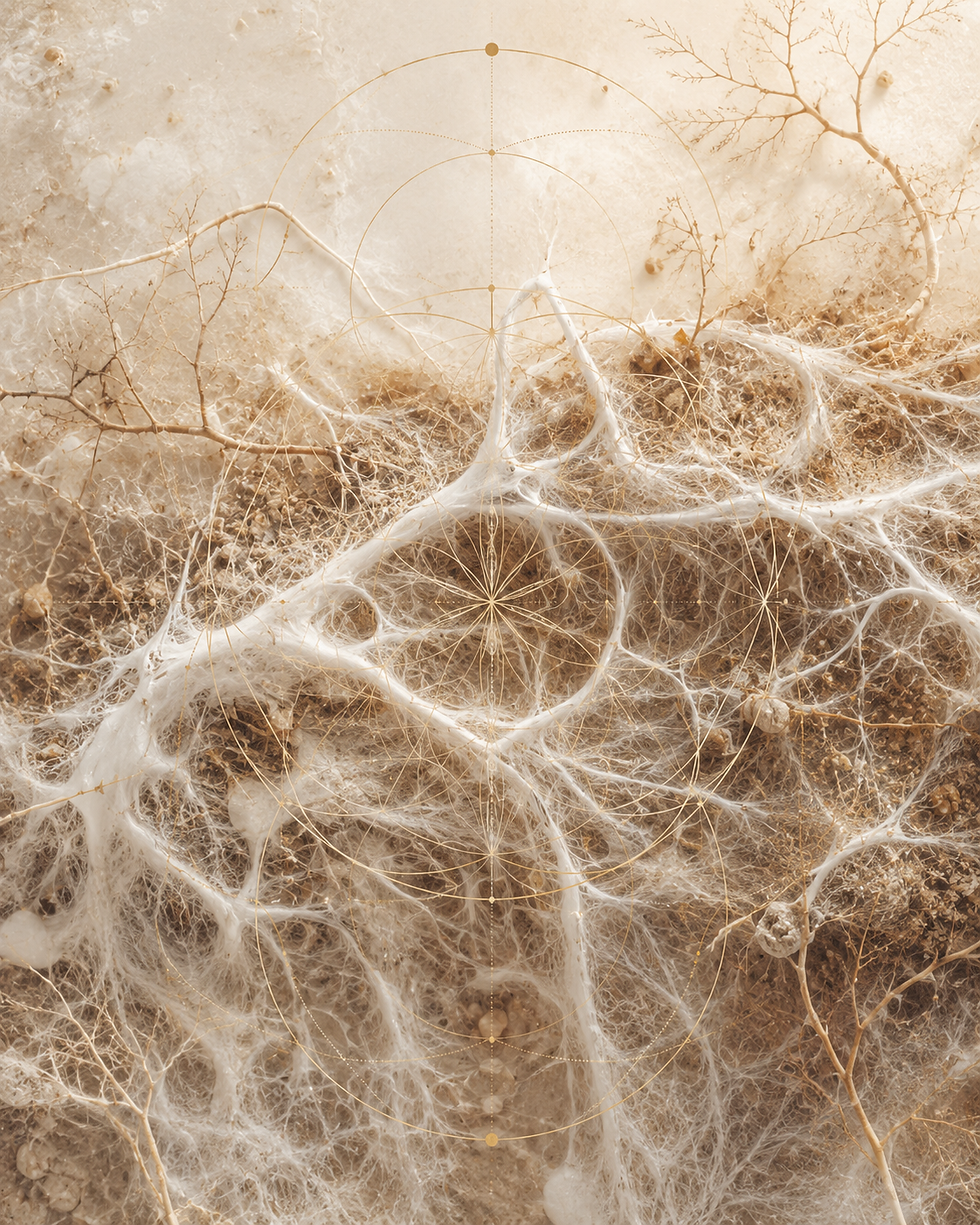
I was sitting with beauty when I realized something.
Beauty is not random.
Beauty repeats.
It spirals.
It branches.
It folds.
It returns.
It arranges itself through rhythm, proportion, sequence, and pattern.
Fractals in leaves.
Spirals in shells.
Branches in trees.
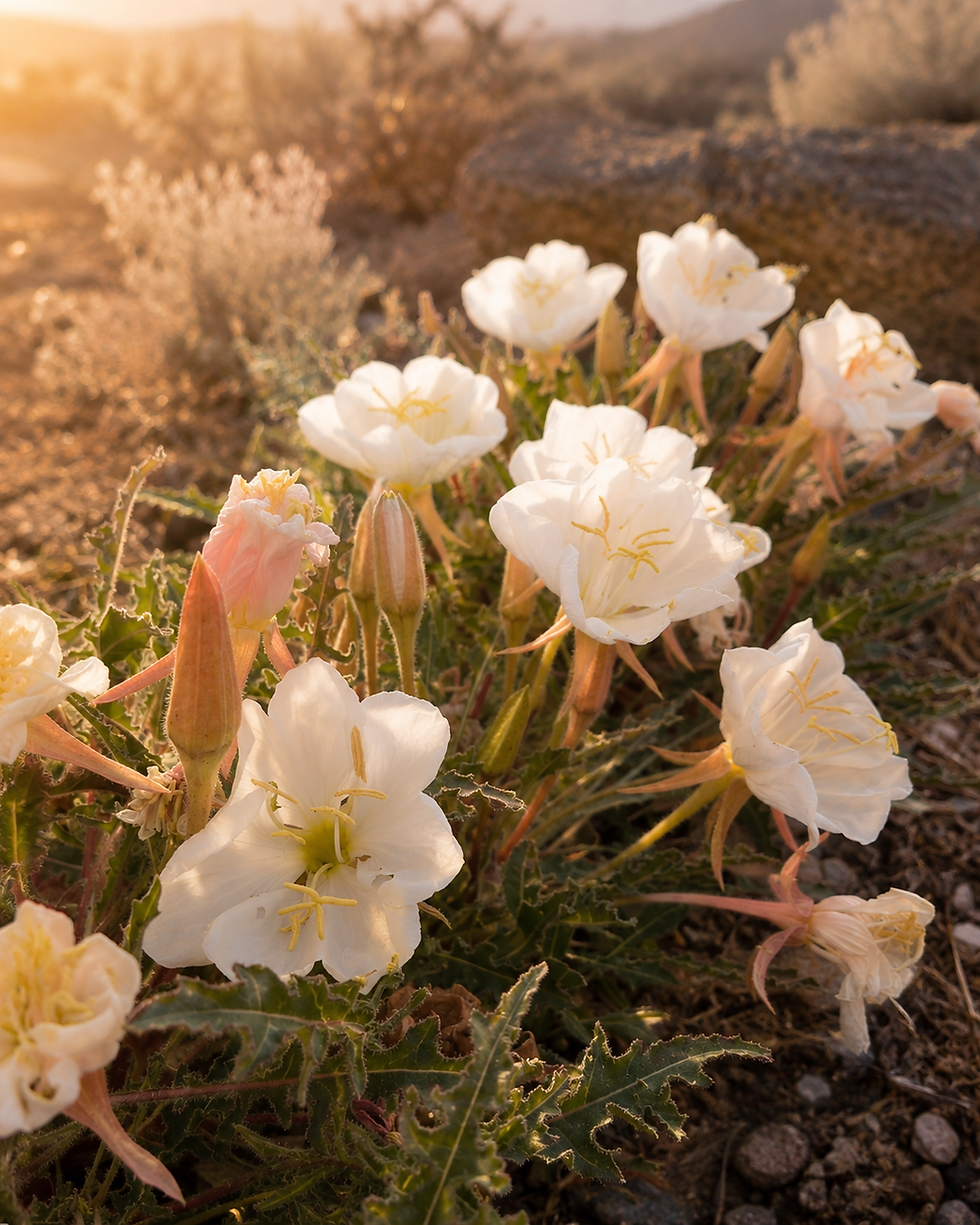
Petals around a center.
Waves returning to shore.
Numbers repeating.
Geometry unfolding.
Pattern inside pattern inside pattern.
Repetition is not separate from nature.
It is one of nature’s primary languages.
We see it everywhere.
In the symmetry of flowers.
In the veins of leaves.
In the spiral of a shell.
In the branching of trees.
In river ways, seeds, stars, snowflakes, galaxies, and breath.
When nature repeats herself, we call it beautiful.
We call it intelligent.
We call it divine.
We call it sacred geometry.
And then, almost all at once, my mind flashed to a child playing.
A child lining up cars.
Sorting colors.
Stacking blocks.
Repeating sounds.
Tracing the same pathway.
Returning again and again to the same arrangement.
And something in me opened.

Maybe this is not broken play.
Maybe this is not something empty, rigid, or wrong.
Maybe this is the child touching the language the whole world is made from.
Maybe this is the child touching the beauty of God, of Source, of the sacred intelligence that repeats itself into flowers, shells, stars, rivers, branches, galaxies, and breath.
And then the question became impossible to ignore:
How could we call wrong in children what we call sacred in nature?
How could we praise the spiral in the shell,
the symmetry of the flower,
the branching of the tree,
the fractal pattern of the leaf,
the rhythm of the wave returning to shore —

and then look at a child arranging the world into pattern and immediately call it something to correct?
Maladaptive.
Rigid.
Obsessive.
Nonfunctional.
Something to interrupt.
Something to reduce.
Something to redirect.
Something to extinguish.
But what if we paused?
What if the child is not simply “stuck”?
What if they are studying order?
What if they are creating beauty?
What if they are building predictability in a world that often feels too loud, too fast, too random, too much?
What if pattern is not always a problem?
What if pattern is sometimes how the nervous system finds its way back to safety?
Children are born close to wonder.
Before they are trained to value productivity, performance, speed, and social appearance, they often notice what adults have forgotten how to see.
The shimmer of repetition.
The comfort of sameness.
The pleasure of sequence.
The beauty of order.
The relief of returning to something known.
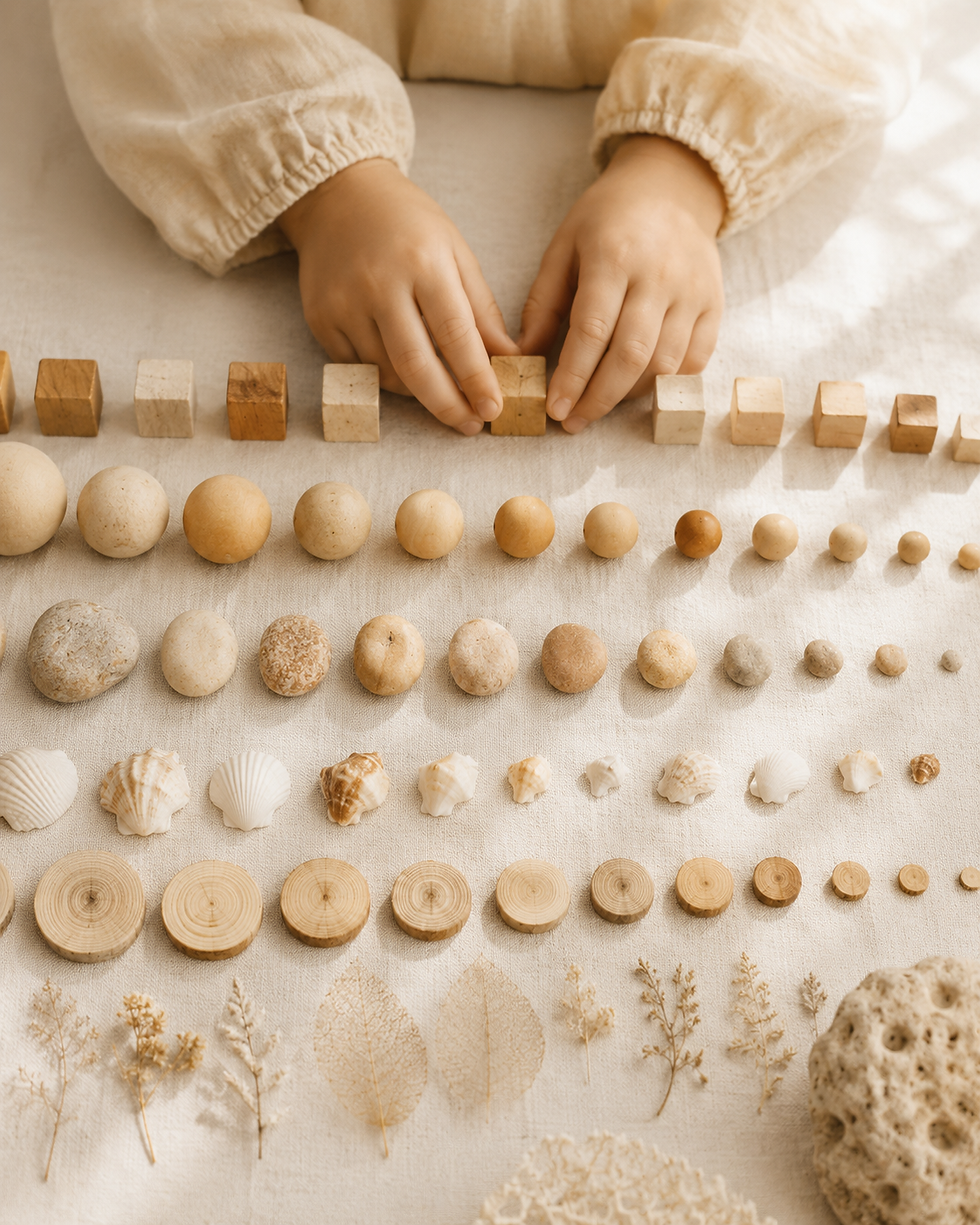
A child lining up toys may be doing something much deeper than “not playing correctly.”
They may be exploring rhythm.
Mapping space.
Creating visual harmony.
Finding symmetry.
Calming their body through predictability.
Creating a world their nervous system can trust.
Maybe this is play in one of its most ancient forms.
Maybe this is the child touching the same pattern language that lives in flowers, shells, stars, rivers, branches, and galaxies.
The same language through which beauty forms.
The same language through which the world organizes itself again and again into endless variation, endless return, endless life.
And somewhere along the way, we decided that when nature repeats, it is sacred —
but when a child repeats, it is a behavior.
What if we are missing the beauty?
What if we are missing the intelligence?
What if we are interrupting the very pathway their nervous system is using to find safety?
Because sometimes repetition is not a problem to solve.
Sometimes it is a strategy.
An orientation.
A relief.
A rhythm.
A way of creating order inside overwhelm.
A child may return to the same sequence not because they are unreachable, but because the sequence helps them feel reachable to themselves.
They may line things up because the line makes sense.

They may sort because sorting brings calm.
They may repeat because repetition creates rhythm.
They may spin, stack, count, arrange, trace, gather, or return because their body has found a pathway toward steadiness.
And when a child is under stress, when the world becomes too bright, too loud, too demanding, too unpredictable, pattern may become even more important.
The repeated path.
The familiar order.
The same sound.
The same arrangement.
The same movement.
The same beginning, middle, and end.
Not because the child is broken.
But because the child’s body may be reaching for something deeply human:
safety,
predictability,
beauty,
rhythm,
and return.

So instead of asking first,
What behavior do we need to stop?
we might begin with a different question:
What is this pattern giving the child?
Is it giving them safety?
Predictability?
Control?
Beauty?
Sensory regulation?
A way to think?
A way to organize the world?
A way to recover from overwhelm?
A doorway into connection?
This does not mean every repetitive behavior should be ignored.
Some patterns can become harmful, painful, isolating, or interfere with basic needs. Children and families still deserve support. Safety still matters. Expansion still matters. Learning still matters.
But support does not have to begin with removal.
It can begin with reverence.
With curiosity.
With joining.
With asking what wisdom the pattern is holding before we try to break it apart.
A better question may not be:
How do we get them to stop repeating?
A better question may be:
How do we understand what the repetition is doing?
And then:
How do we support the child without taking away the thing that helps them feel safe?
What would happen if parents, therapists, teachers, and providers paused before redirecting?
What would happen if we looked at repetitive play the way we look at a flower?
Not as something to fix, but as something to study.
Something to honor.
Something to understand.
Something alive with intelligence.
Maybe the line of cars is a sentence.
Maybe the colors are a map.
Maybe the sequence is a song.
Maybe the repetition is a prayer.
Maybe the arrangement is how the child’s body says:
This is where I feel safe.
This is where the world makes sense.
This is where you can meet me.
Maybe the pattern is not the barrier.
Maybe the pattern is the bridge.
And maybe our work is not always to pull the child away from the pattern.

Maybe our work is to tend the field around it.
To soften our assumptions.
To enter with respect.
To join gently.
To notice what the child sees.
To let the pattern become a doorway into relationship instead of treating it as proof that relationship is absent.
Because nature repeats herself into beauty.
And maybe our children are doing the same.
Maybe they are arranging the world into something their bodies can trust.
Maybe they are finding their way home through pattern.
Maybe the child was never broken.
Maybe the pattern was never broken.
Maybe we only forgot how to see.

Comments